
The Creature’s Place in Law
Fantastic Beasts and Where to Find ThemThis flow follows the conflict between official rules for magical creatures and the different ways creatures, owners, and authorities experience those rules.
increasing Bearing strength in each event
 decreasing
Bearing strength in each eventdecreasingAn International Mandate
An International Mandate
Responsibility assigned
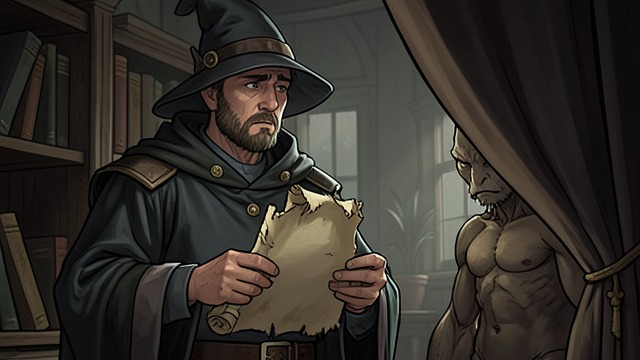
Clause 73 assigns each governing body responsibility for the creatures within its territory. Concealment, care, and control become linked duties rather than separate concerns.
Consequences of failure
If a creature harms Muggles or attracts their notice, its nation’s wizarding authority may face discipline. A local incident can therefore carry international stakes.
The rule establishes a strong framework, but it cannot make animals predictable. Its enforcement must contend with creature behaviour, human negligence, and the limits of concealment.
Habitats Versus Instinct
Habitats Versus Instinct
Protected spaces
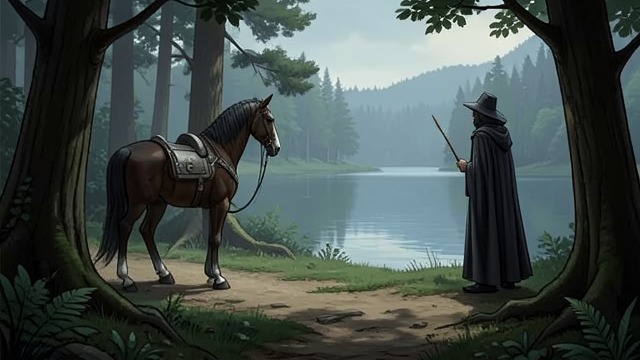
Authorities set aside forests, lakes, and rivers for creatures such as Centaurs, Unicorns, and Merpeople. Charms keep Muggles from trespassing, while the most difficult cases may require land to be made unplottable.
Boundaries that fail
Some creatures do not remain inside managed areas. Dragons seek prey beyond reservations, while a Kelpie can cancel protective charms by drawing people toward it.
The conflict is between administrative borders and animal drives. A protected habitat can reduce danger, but it cannot erase the instincts that make supervision necessary.
Trade and Experiment Under Pressure
Trade and Experiment Under Pressure
Restricting human activity
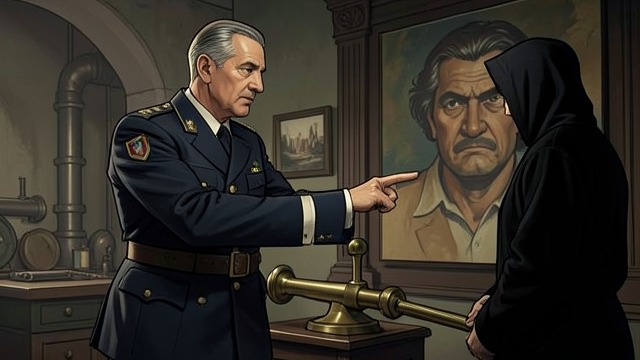
Trade controls and severe penalties limit the sale and breeding of large or dangerous creatures. The 1965 Ban on Experimental Breeding makes the creation of new species illegal.
Enforcement remains necessary
Even a clear ban cannot guarantee compliance. The Department for the Regulation and Control of Magical Creatures monitors trade, and valuable eggs or body parts can create incentives for evasion.
The law responds to harm that humans may cause as much as to danger posed by animals. Regulation tries to prevent new risks while limiting the exploitation of existing species.
Owners as Part of the System
Owners as Part of the System
Obligations at home
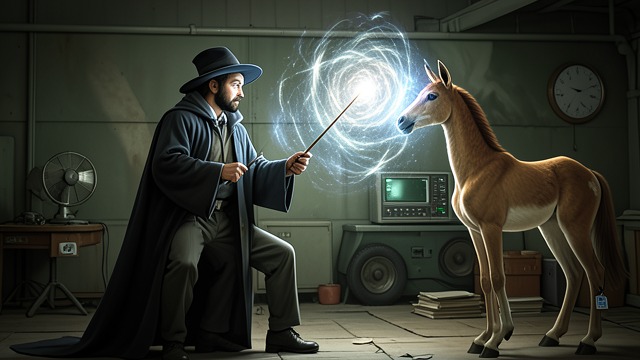
Owners of Hippogriffs must use Disillusionment Charms to distort a Muggle’s view, and some species require licences. Keeping a magical animal therefore carries responsibilities beyond feeding and housing it.
Routine can lapse
Charms must be renewed because their effects wear off. Licences and controls matter because even a well-intentioned owner can expose creatures and communities through carelessness.
This point brings public policy into private life. Secrecy depends not only on distant officials but on everyday choices made by the wizards who keep unusual animals.
The Ilfracombe Breach
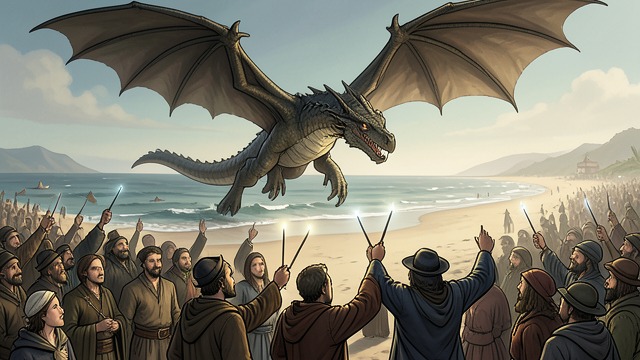
The Ilfracombe Breach
A public emergency
A rogue Common Welsh Green Dragon swoops over a crowded beach at Ilfracombe. The sighting threatens to reveal the existence of magical creatures to a large Muggle crowd.
Emergency repair
A wizarding family performs a mass Memory Charm, preventing fatalities and narrowly averting a wider catastrophe. The response is brave, but its scale shows how much effort a secrecy breach can demand.
The incident demonstrates the limits of prevention. Even established rules and protected areas cannot stop every creature from reaching the public world; concealment may have to be restored under pressure.
1750
after safe habitats are established
after the 1965 Ban on Experimental Breeding
when conspicuous magical animals are kept by wizards
1932
